



The United Nations Headquarters in New York proudly hosted the Chinese Language Day celebration under the theme "Poetic China, Rhymes and Romance" on April 15, 2025. The event was co-organized by the Permanent Mission of China to the UN, the Chinese People's Association for Friendship with Foreign Countries, the People's Government of Anyang City (Henan Province), and the National Museum of Chinese Writing, with the exhibition segment curated and executed by the exhibition division of the China Arts and Entertainment Group (CAEG).
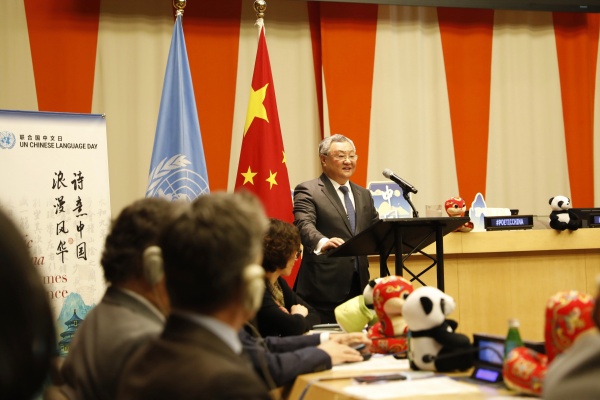
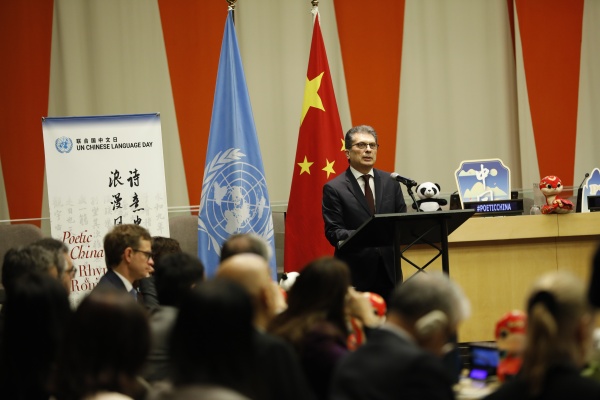
The ceremony welcomed over 400 distinguished guests, including diplomats, scholars, and representatives from academic institutions worldwide. It was broadcast live via UN Web TV and covered extensively by major media outlets such as the Xinhua News Agency, the People's Daily Online, CCTV News, and The Paper. The event also gained wide traction across domestic and international social media platforms, reaching an estimated audience of over 3 million people.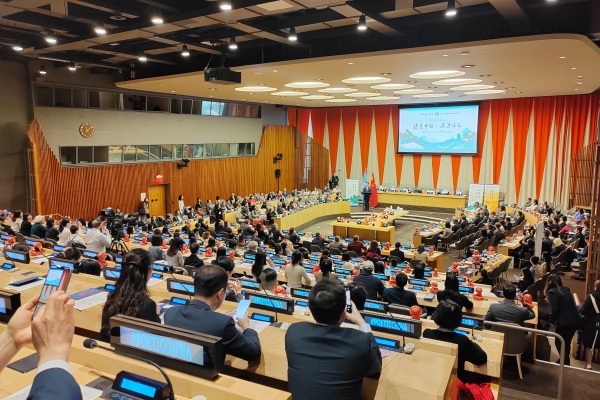
Since 2010, the United Nations has designated "Grain Rain"—one of the 24 traditional Chinese solar terms—as UN Chinese Language Day, in honor of Cang Jie, the legendary figure credited with creating Chinese characters. The 2025 celebration featured live performances, virtual reality experiences, and a special Chinese character exhibition, all designed to showcase the beauty of the Chinese language, inspire interest in learning the Chinese language and culture, and deepen mutual understanding between China and the world.
A key highlight of the day was the exhibition "Between the Lines: The Civilizational Code in Chinese Characters", which made its second international appearance following its debut at the Paris China Cultural Center in 2024. Through the story of a young warrior from the 14th century BC Shang dynasty, the exhibition presented nearly 100 carefully selected Chinese characters. Enhanced by original illustrations and augmented reality (AR) technology, it vividly animates ancient oracle bone script and brings to life the social landscapes of the Shang and Zhou dynasties.
More than just a visual journey, the exhibition weaves together narrative appeal, interactive fun, and rich historical insight. Visitors are invited not only to glimpse the material life and spiritual world of China 3,000 years ago, but also to explore the civilization's enduring ideals. By connecting the ancient past with contemporary technology, the exhibition offered a dynamic gateway to understanding the depth and continuity of Chinese civilization.


